Morning light falling through green foliage onto stone steps in a quiet garden

Brookfield, Connecticut · In person & telehealth

Healing does not require the right words. It requires the right conditions.

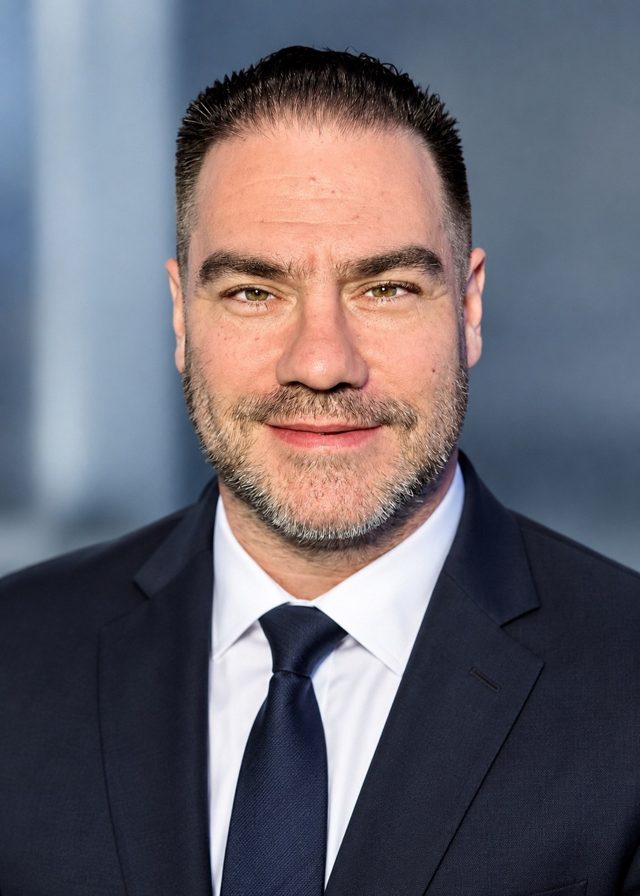
I’m Mark J. Ferry, a licensed clinical social worker offering EMDR and trauma-focused therapy for children, teens, adults, couples, and families — including the wounds that were laid down long before language.

Brookfield, CT (475) 275-6764

About me

A garden is not forced open. It is tended.

That is how I understand recovery. Nothing about you needs to be fixed or argued out of you. What you carry made sense at the time it was learned. My work is to help create the conditions — safety, pacing, attunement — under which your nervous system can finish something it was never able to finish.

I work with children as young as six through elders, with individuals, couples, and families. People often come to me carrying anxiety, depression, grief, the aftermath of a traumatic brain injury or concussion, addiction and compulsive behavior, or a long history of childhood experiences that never got words. I also work with veterans and first responders.

My primary tool is EMDR therapy, and I use specialized EMDR protocols alongside Internal Family Systems, DBT skills, CBT, mindfulness, play therapy, and attachment-based and strength-based work. Which of these we use is a decision we make together — it depends on what your system is ready for, not on what is fashionable.

If any of this sounds like the kind of help you are looking for, the first step is a free 15-minute phone conversation. No paperwork, no commitment. Just a chance to hear each other out.

  • LicenseLicensed Clinical Social Worker, State of Connecticut · #10787
  • EducationMSW, Sacred Heart University · MFA
  • Ages servedChildren (6–10), preteens, teens, adults, elders 65+
  • SessionsIndividuals, couples, and families · in person and telehealth
  • DirectoryVerified profile on Psychology Today
A quiet therapy office with two soft chairs, plants, and afternoon light through linen curtains
Sessions are unhurried and paced to what your nervous system can hold.

Education

What EMDR therapy actually is

EMDR stands for Eye Movement Desensitization and Reprocessing. It was developed by Francine Shapiro in 1987 and is guided by the Adaptive Information Processing model, which holds that distressing experiences can be stored in the brain in an unprocessed form — still carrying the original images, beliefs, emotions, and body sensations (American Psychological Association). When something in the present resembles that stored experience, the old material fires as though it were happening now.

EMDR does not require you to retell your story in detail, and it is not hypnosis. In treatment you hold a piece of the memory in mind while attending to a second, grounding stimulus — usually eye movements, alternating taps, or alternating tones, known as bilateral stimulation. This dual attention appears to let the brain resume a processing job that stalled. The memory does not disappear; it stops behaving like an emergency.

EMDR therapy is named as a treatment for PTSD and other trauma and stressor disorders in the treatment guidelines of the American Psychological Association, the World Health Organization, and the U.S. Departments of Veterans Affairs and Defense, among others (EMDR International Association).

The eight phases of treatment

PHASE 1

History & treatment planning

We map your history, your current symptoms, and your internal and external resources, then build a plan together.

PHASE 2

Preparation

We build the working relationship, explain what to expect, and put coping skills in place before we touch anything difficult.

PHASE 3

Assessment

We identify the specific target — image, belief, emotion, body sensation — and take baseline ratings of distress and of how true a new belief feels.

PHASE 4

Desensitization

Bilateral stimulation begins while you hold the target in mind, continuing until the distress it carries falls away.

PHASE 5

Installation

We strengthen the adaptive belief you want to hold about yourself until it feels entirely true.

PHASE 6

Body scan

Holding the memory and the new belief together, we scan head to toe and clear any residue still held in the body.

PHASE 7

Closure

Every session ends with you returned to the present and steady, whether or not the processing finished that day.

PHASE 8

Reevaluation

The next session opens by checking that the gains held, then choosing where to go next.

Phase descriptions adapted from the EMDR International Association. Not every phase appears in every session, and the order is a map rather than a schedule.

Specialized work

Three areas I go deeper in

Standard EMDR assumes there is a memory you can picture and words you can attach to it. Often there isn’t. These protocols are built for exactly that situation.

Clearing the affective circuits

A preparation method that down-regulates the primitive emotional systems themselves, so that later trauma work does not overwhelm you.

  • For chronic emotional flooding
  • Done before memory processing
  • Requires no memories at all

Early childhood & preverbal trauma

Reprocessing what happened before you had language for it — infancy, birth, and the first years — by working through time periods rather than pictures.

  • Neglect and attachment injury
  • Adoption, separation, medical trauma
  • Adults and children alike

DeTUR — urges and triggers

An urge-reduction protocol for addiction and compulsive behavior that starts from where you want to get to, not from what you must stop doing.

  • Substances, gambling, food, screens
  • Usable early in recovery
  • Relapse treated as information
01

Clearing the affective circuits

Preparation & affect regulation

Underneath everything you have learned about yourself sit a handful of emotional systems you were born with. The neuroscientist Jaak Panksepp identified them in mammals as SEEKING, RAGE, FEAR, LUST, CARE, PANIC/GRIEF, and PLAY — subcortical circuits that are present from birth and require no learning at all (Paulsen, Six Tips from Science). They are not thoughts. They are hardware.

When early life is frightening or unmet, those circuits get set to run hot. The result is an adult whose fear or grief or rage arrives at full volume with no apparent cause, and who cannot use insight to turn it down — because the volume knob is below the part of the brain that does insight.

Katie O’Shea’s early-trauma preparation addresses this directly. Before any memory is touched, we build three things: containment, a reliable place to set aside everything not yet sorted through, so we have a clear working surface; a felt sense of safety, located in the body rather than argued for; and then the resetting of the affective circuits themselves, taking each innate emotion in turn with bilateral stimulation. Clinically, this appears to act on the primary-process affective circuits to down-regulate emotional intensity (O’Shea, When There Are No Words).

What people usually notice afterward is not that anything has been forgotten. It is that emotion has become information again rather than a flood. That is what makes the trauma work that follows survivable — and it is why, with many of the people I see, this is where we begin.

Who this tends to help: people who describe themselves as “too much” or “shut down,” who have tried talk therapy and understood everything without feeling any different, or who have previously been overwhelmed by trauma processing and stopped.

02

Early childhood trauma processing

Implicit & preverbal memory

A great deal of what shapes a person happens before they can speak. Experiences from the womb, birth, infancy, and the first three years are stored implicitly — as body sensation, emotion, movement, and relational expectation — without the narrative context that later memories carry. There is no film to replay. There is only a pattern that keeps repeating.

Standard EMDR asks for a picture and a belief. Preverbal material offers neither, so Katie O’Shea and Sandra Paulsen developed an approach that targets consecutive time periods instead of images, beginning before birth and moving forward. What emerges is exactly what you would expect from that age: a sensation of pressure, an impression of cold or stillness, a body that leans, a conviction that one must not make a sound (Dellucci, on the early trauma protocol). We desensitize what arises and imaginally install the experience that should have been there — a process Paulsen calls temporal integration, building the developmental record from the bottom up, time frame by time frame (Attachment repair and temporal integration).

With actual children, the work looks different again. EMDR storytelling, developed by Joan Lovett, uses a narrative written by the caregiver to activate and process implicit memory in children as young as infancy; dyadic models treat the child and the caregiving relationship together rather than the child alone (Wizansky & Bar Sadeh, 2021). With adults, attachment-focused EMDR uses the therapeutic relationship itself as part of the repair (EMDRIA on attachment and EMDR).

If you have no memories of the years you suspect matter most, you are not disqualified from this work. You are precisely the person it was designed for.

03

DeTUR

Desensitization of Triggers & Urge Reprocessing

DeTUR — Desensitization of Triggers and Urge Reprocessing — was developed by Dr. Arnold J. “A.J.” Popky and first presented as a stop-smoking protocol at the inaugural EMDR conference in 1992. It rests on the same Adaptive Information Processing model and the same bilateral stimulation as standard EMDR, but it points somewhere different: instead of targeting a traumatic memory, it targets the trigger and the urge itself (Popky, in Luber’s EMDR Scripted Protocols).

Four things make it unusual. Attention is directed toward a positive, attractive, achievable goal rather than away from a behavior. Abstinence, while strongly recommended, is not itself the definition of the treatment goal — coping and functioning well, as you describe it, is. Relapse is reframed from failure into a new target of opportunity for the next session. And because individual triggers are what get desensitized, the protocol can be used with people early in recovery, before deep trauma work would be safe (Popky, DeTUR overview).

Where standard EMDR measures Subjective Units of Distress and Validity of Cognition, DeTUR uses a single measure — Level of Urge — and it accesses positive experience through positive body states rather than through cognitions. The two protocols also feed each other: focusing on trauma tends to uncover triggers, and focusing on triggers tends to uncover the traumas underneath them.

  1. Find and strengthen a resource state — confidence, hope, safety — using bilateral stimulation, then anchor it to a physical cue you can use anywhere.
  2. Build a positive treatment goal in your own words: near-term, achievable, and genuinely magnetic to you.
  3. List your triggers — the people, places, smells, times of day, and states of mind — and order them by intensity.
  4. Process each trigger with bilateral stimulation until the Level of Urge drops to zero.
  5. Re-anchor and rehearse. Reinstall the positive state and run future scenarios so the new response is the one that’s available under pressure.
DeTUR has been used across chemical and behavioral addictions alike — alcohol, nicotine and other substances, gambling, eating, sexual behavior, and internet and gaming compulsion (Francine Shapiro Library). It works best as one part of a broader plan that includes your external supports.

Video library

Watch and learn

Short explanations, demonstrations, and talks — some mine, some from colleagues and organizations whose work I trust. Watch them before a first session, between sessions, or simply out of curiosity.

Neurobiology of trauma

The Neurobiology of Trauma

David Lisak on how trauma reshapes the brain and nervous system — useful context before starting EMDR or trauma-focused work.

David LisakYouTube

Practical details

Fees and what to expect

Session fees

$300 per hour · Individual session

$300 per hour · Couple session

A free 15-minute phone consultation comes first, at no cost and with no obligation.

Areas of focus

  • Traumatic brain injury & post-concussion
  • Anxiety, depression, and stress
  • Early childhood & developmental trauma
  • Addiction and compulsive behavior
  • Grief and family conflict
  • Veterans and first responders
  • Dissociation and self-harm
  • Self-esteem and coping skills

How I work

  • EMDR and trauma-focused therapy
  • Internal Family Systems (IFS)
  • Dialectical Behavior Therapy skills
  • Cognitive Behavioral Therapy
  • Mindfulness-based approaches
  • Attachment-based & person-centered
  • Play therapy for younger children
  • Family and couples work

Get started

Fifteen minutes on the phone costs you nothing.

Tell me briefly what’s going on and what you’re hoping for. If I’m the right fit, we’ll schedule. If I’m not, I’ll help you figure out who is.

Brookfield, Connecticut · In person & telehealth appointments